Shopify payment plans: how they work and which to choose
Yes, you can offer payment plans on Shopify. Compare native Shop Pay Installments, BNPL apps, and merchant-funded plans, and see which fits your store.
Shopify payment plans: how they work and which to choose
Yes, you can offer payment plans on Shopify, and there are four routes to it: Shopify's native Shop Pay Installments, a third-party buy now, pay later (BNPL) provider, a deposit or invoice app, or a merchant-funded payment plan app where the customer pays you directly over time. The right choice depends on one question most guides skip: whether you need the money upfront, or whether you can wait and keep control of the terms.
That distinction matters more than the feature lists suggest. All four kinds of Shopify payment plans let a customer split a payment. Only some of them let you decide the schedule, and only some avoid putting a lender between you and your buyer.
If you sell high-AOV products, you've probably already felt the problem. A $2,400 dining table or a $3,000 custom ring is a genuine commitment, and a single full-price charge at checkout asks a lot of a first-time buyer. Cart abandonment sits at 70.22% on average across 50 studies, and payment friction is part of that picture; if you want your own number rather than the average, funnel analytics will show you how many visitors from each source reach checkout and how many actually buy.

This guide covers what Shopify does natively, what needs an app, how a merchant-funded plan actually works step by step, what each route costs, and, just as usefully, when you shouldn't offer payment plans at all. We build Payment Plans (by PreProduct), so we'll be upfront about where our own model is the wrong fit.

Key Takeaways - Shopify payment plans come in four forms, but Shopify has no built-in, merchant-defined installment feature. Shop Pay Installments is native but lender-backed, and everything else needs an app. - Shop Pay Installments covers orders from $35 to $30,000 and is available in the US, Canada, and the UK, with rates from 0% to 36% APR depending on eligibility. - The real dividing line is who funds the purchase: a lender pays you upfront and collects from your customer, or your customer pays you directly over time. - With a merchant-funded plan, the order sits on a fulfillment hold and ships only once it is fully paid. That hold is the structural protection that makes the model work. - The honest tradeoff: you get paid over time instead of upfront, and your stock stays allocated until the final installment clears.
Can you offer payment plans on Shopify?
Yes. Shopify supports payment plans through Shop Pay Installments, its own built-in option, and through third-party apps for everything else. What Shopify does not have is a native feature that lets you define your own installment schedule and charge a customer's card automatically without a lender involved. That specific capability requires an app.
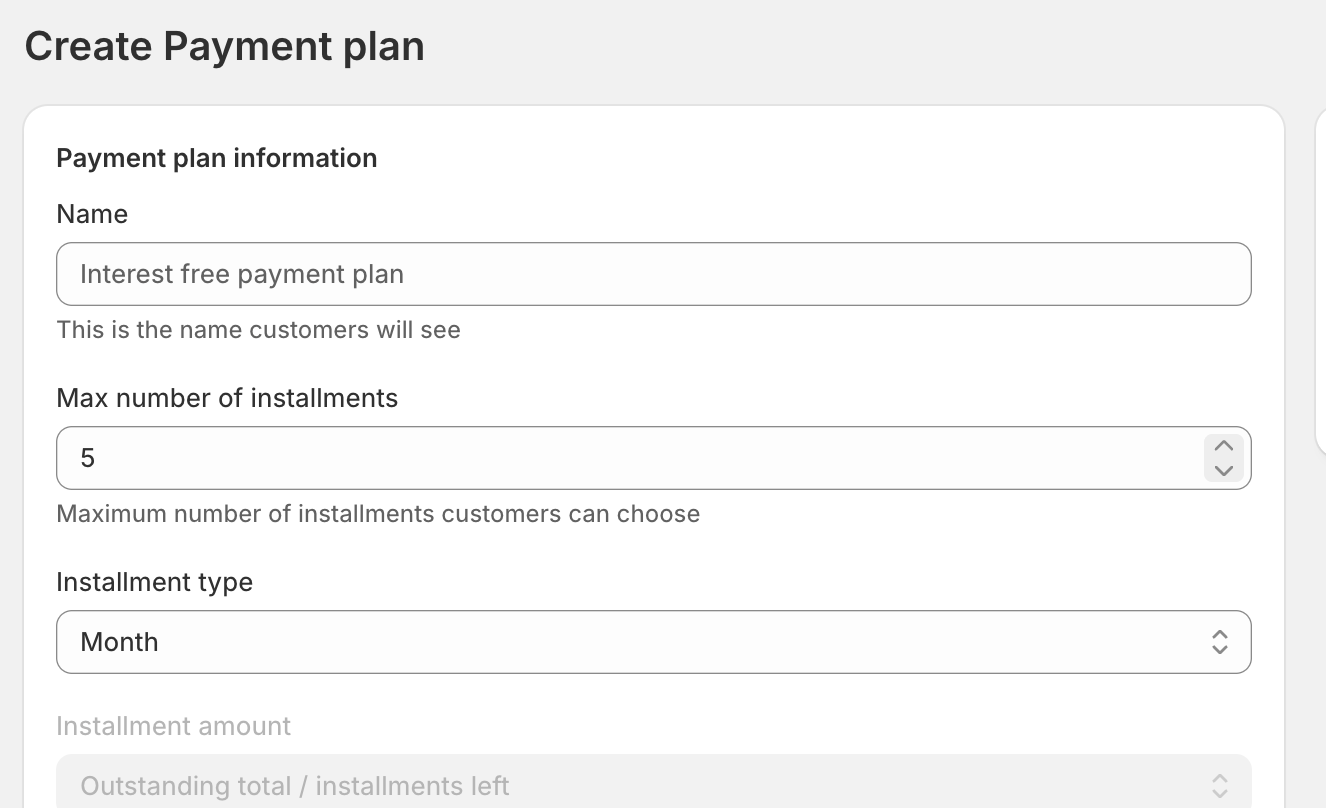
This is where a lot of merchant confusion starts, so it's worth separating the two clearly.
What Shopify handles natively
Shop Pay Installments is genuinely built into Shopify. If your store is eligible, you enable it in your payment settings and it appears at checkout without any app install. Shopify reports a 50% increase in average order value for one in four merchants using it, and 28% fewer abandoned carts among merchants who switched from a third-party installments solution. Those are Shopify's own figures for their own product, so read them as vendor claims rather than neutral benchmarks, but the direction is credible.
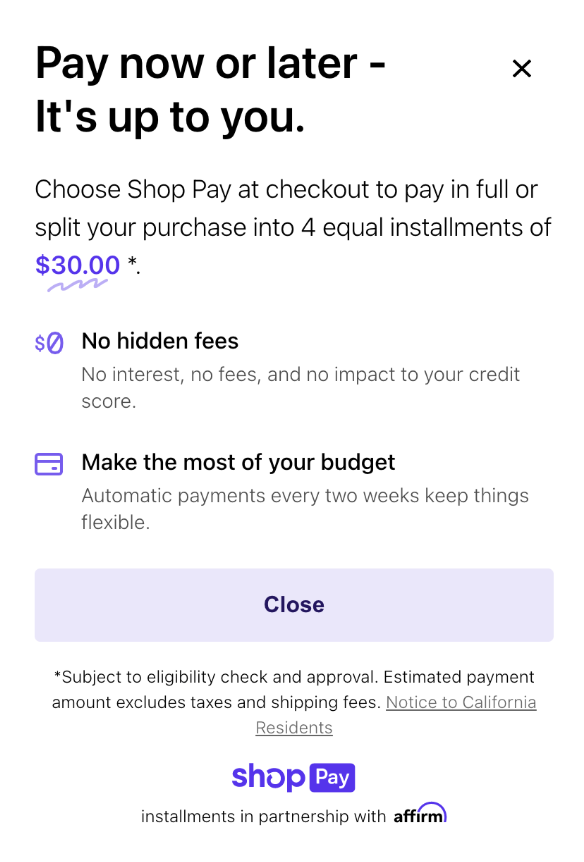
The important structural point: Shop Pay Installments is a lending product. A finance partner underwrites the purchase, the customer repays them, and you receive full payment within 1 to 3 business days minus the Shop Pay Installments fee. Shopify doesn't publish that fee rate publicly. You'll find your own rate in your admin under Settings, then Payments, then Shopify Payments, then View payment rates.
What needs an app
Everything that isn't lender-backed. If you want to set your own payment lengths, decide which products qualify, run a schedule longer or shorter than a provider offers, or avoid a credit decision sitting between you and your customer, you need a payment plan app.
There's also a practical ceiling to consider. Shop Pay Installments caps at $30,000 and covers only the US, Canada, and the UK, and the gateway, market and product-type rules behind that are stricter than most merchants realise — what actually qualifies for Shop Pay Installments is worth checking before you plan around it. If you sell above that, or sell into markets it doesn't reach, the native route runs out regardless of how you feel about lenders.
The four ways to offer payment plans on Shopify
Each route solves a different problem. Here's the honest comparison.
| Factor | Shop Pay Installments | Third-party BNPL | Deposit / invoice apps | Merchant-funded plan app |
|---|---|---|---|---|
| Who funds the purchase | Lending partner | BNPL provider | Customer | Customer |
| When you get paid | 1 to 3 business days | Usually upfront | Split, often manual | As each installment clears |
| Who sets the schedule | Shopify and its partner | The provider | You | You |
| Credit check on customer | Provider-run | Provider-run | None | None |
| Order value limits | $35 to $30,000 | Provider-set | You decide | You decide |
| Charging | Automatic | Automatic | Varies, often manual invoices | Automatic, vaulted card |
| When it ships | Often immediately | Often immediately | Varies | After full payment |
1. Shop Pay Installments. The lowest-effort option if you're eligible. No app, no configuration, and your customer sees a familiar Shop Pay flow. You're paid quickly and can ship right away.

2. Third-party BNPL providers. Klarna, Afterpay, Affirm, and others. Same structure as Shop Pay Installments, with different fees, geographies, and shopper brand recognition. Worth comparing if the native option isn't available to you, or its limits don't fit. We've mapped the full landscape in our guide to alternatives to buy now, pay later for merchants.
3. Deposit and invoice apps. Collect a deposit at checkout, bill the balance later. The critical thing to check before you commit: whether the app charges a stored card automatically or emails your customer an invoice they have to act on. That difference determines whether you're running a payment plan or a debt collection process.
4. Merchant-funded payment plan apps. Your customer pays you directly, in installments, through one Shopify checkout. No lender approves anything. You define the schedules and eligible products, and the order stays on hold until it's fully paid.
Want to see the fourth model in practice? See how Payment Plans works before comparing it against the lender-backed routes.
How a merchant-funded payment plan works, step by step
The money and the goods move on two separate timelines. Following both in order is the fastest way to understand the model.
Take a $1,200 product, with payment lengths of three, six, or twelve months available. A customer picks six months and checks out through Shopify like any other order.
- The first $200 installment is charged at checkout. Not a reservation fee, not a hold: a real payment that lands in your account.
- The card is securely vaulted by Shopify. Neither you nor PreProduct ever handles raw card data.
- Shopify creates the order immediately, and places it on a fulfillment hold.
- $200 is charged automatically each month for the next five months. Your customer does nothing.
- After the sixth installment clears, the hold is released and you ship.
Note what happens on your side of that timeline. You receive $200 six times over six months rather than $1,200 once. That's the tradeoff, and it's the thing to model against your own cash position before you install anything.
What you configure
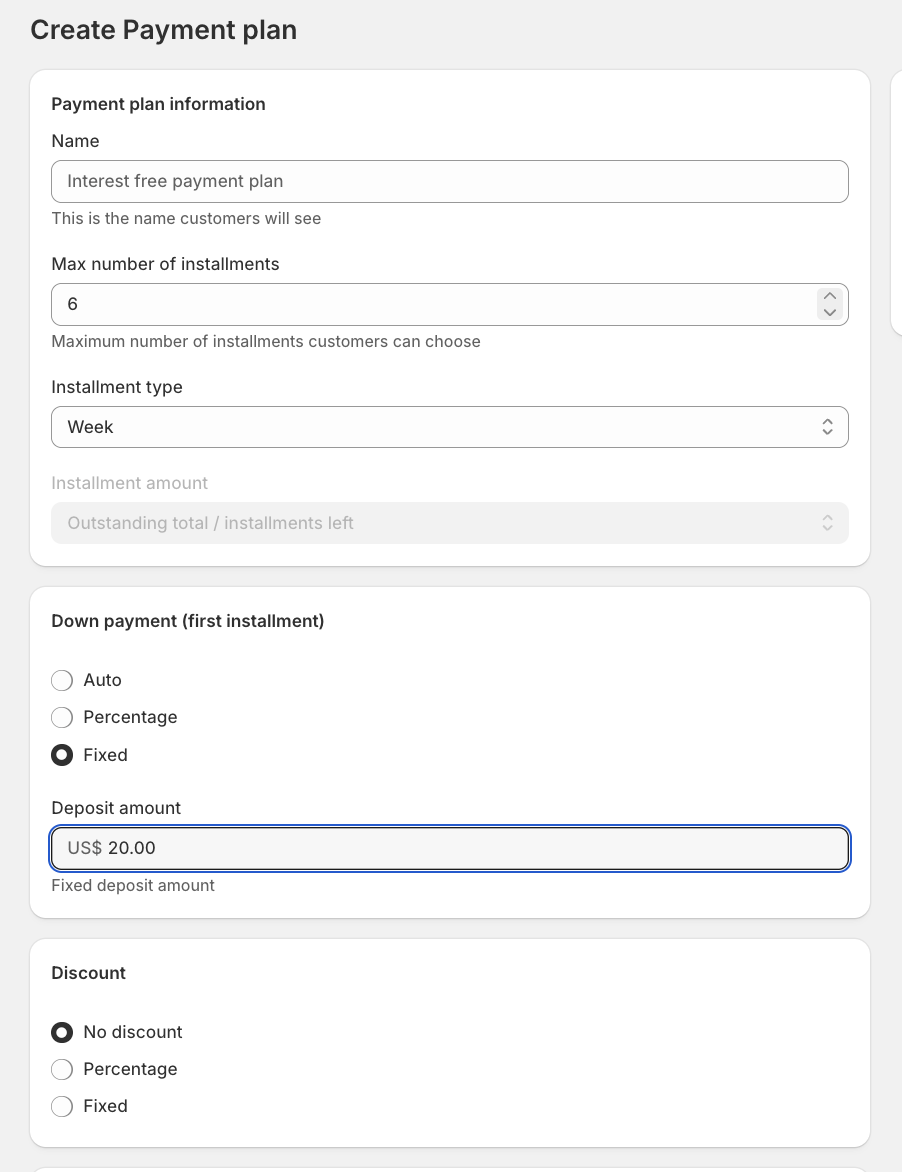
The merchant sets the boundaries; the customer chooses inside them. In Payment Plans, you set the charge frequency (daily, weekly, or monthly) and the minimum and maximum number of installments a customer can select, up to a maximum of 15 payments. You can attach a deposit or a plan-specific discount, and you decide which products qualify.
Product eligibility works either by opting products in directly, or by rules based on product title, tags, product type, or vendor. So tagging a collection payment-plan can make an entire category eligible without touching individual products. Setting up your first plan takes a few minutes; we walk through it in getting started with Payment Plans.
What your customer sees
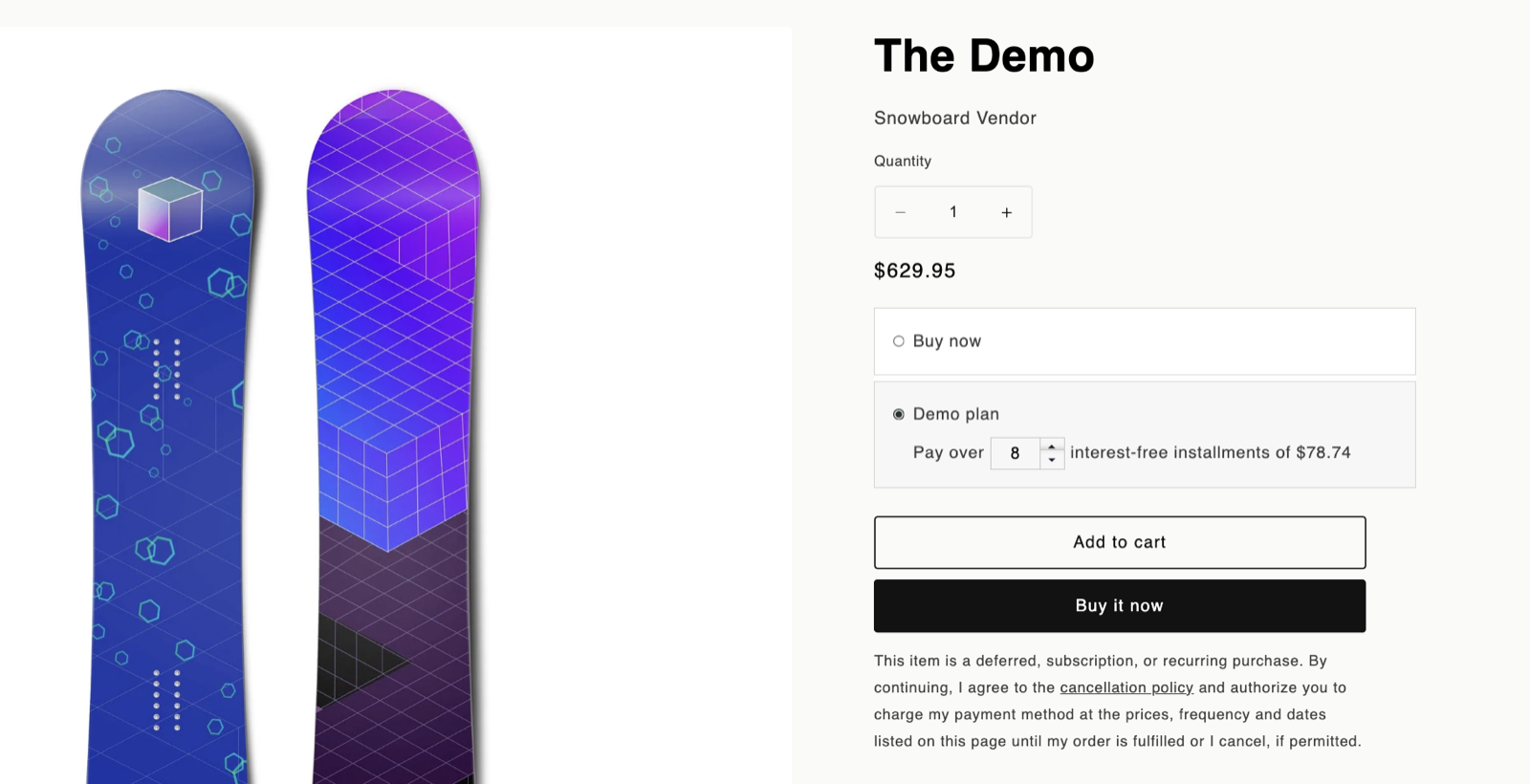
One checkout. They select a payment length from the options you've made available, pay the first installment, and receive a normal Shopify order confirmation. There's no redirect to a lender, no application, and no approval step, because there's no credit decision happening. What they don't get is the product straight away, and that needs to be clear on the product page rather than discovered afterwards.
This is closer to layaway than to BNPL, and framing it that way in your own store copy tends to work better than dressing it up. Customers understand paying something off and collecting it when it's done.
What happens when an installment fails
Cards expire and get replaced. This is the objection every merchant raises, and it deserves a concrete answer rather than reassurance.

A failed charge is retried automatically. You control how many retries (up to four) and how long the app waits between them. If a charge fails in a way that needs the customer to authenticate it, the app sends them a draft order invoice to complete the payment directly. You can also set a number of days after which a persistently failing plan is cancelled automatically, so nothing stalls indefinitely.
Then there's the part that makes the whole model defensible: the goods haven't shipped. Your exposure on a failed merchant-funded plan is administrative time, not lost inventory. That's a materially different risk profile from any model where the product leaves the warehouse before the money arrives.
Refund handling is yours to define too. You can set plans as non-refundable, fully refundable before the final charge, or refundable up to a percentage you choose, and decide whether automatic cancellations trigger a refund. Payment Plans does not provide a loan or perform a credit check. Merchants should confirm that their payment-plan terms, disclosures, cancellation policy, and local setup meet the requirements that apply to their business.
What Shopify payment plans cost
Costs fall into three layers, and comparing routes means comparing all three rather than just the headline rate.
Payment processing. You pay standard Shopify Payments processing on the transaction regardless of which route you choose. This doesn't go away.
The provider's cut, if there is one. Lender-backed options carry a provider fee reflecting the fact that someone is fronting you the money and taking on the repayment risk. Shop Pay Installments' rate is visible in your admin rather than published. Third-party BNPL fees vary by provider and negotiated terms.
The app fee. A merchant-funded app charges you for the software, not for underwriting, because no one is lending anything. Payment Plans runs on either a commission model or a flat monthly fee with no commission; current figures are on the Payment Plans pricing page.
The distinction matters: merchant-funded removes one layer, not all three. There's no BNPL provider fee because there's no BNPL provider, but processing and the app fee remain.
Is a Shopify payment plan right for your store?
Here's where we'd rather lose the install than mislead you.
A merchant-funded plan tends to fit Shopify Plus merchants selling high-AOV products, furniture, jewelry, premium fashion, electronics, specialist equipment, or made-to-order goods, who have enough margin flexibility to receive revenue across a schedule, and who can hold stock allocated until an order clears. Payment Plans requires Shopify Plus.

It's a poor fit if you need the full order value at checkout, you have to dispatch immediately, your stock can't sit allocated, your average order is too small to justify a multi-payment flow, or you'd rather not manage cancellations and failed payments at all. If any of those describe your operation, a lender-backed option or straightforward full payment is the better answer, and there's no shame in the boring choice.
Consider two merchants with the same $2,800 product. One sells made-to-order pieces with an eight-week build time; fulfillment is already delayed, so a payment plan costs them nothing operationally and the hold aligns with production. The other ships from stock the same day and competes on delivery speed; for them, a plan that delays shipment actively damages the offer. Same price point, opposite answers.
Think your catalog fits? See whether Payment Plans fits your store on the Shopify App Store.
Frequently asked questions
Can I offer payment plans on Shopify without Klarna or Afterpay? Yes. A merchant-funded payment plan app lets your customer pay you directly in installments through Shopify checkout, with no BNPL provider involved. You set the schedules, and there's no lender approving the purchase.
Does Shopify have a built-in payment plan feature? Shopify has Shop Pay Installments, which is built in but lender-backed with provider-set terms. There's no native feature for defining your own installment schedule and charging automatically without a lender. That requires an app.
Do payment plan apps require Shopify Plus? It depends on the app. Payment Plans requires Shopify Plus, so Shopify payment plans built on it are only available to Plus stores. Other payment plan and deposit apps set their own requirements, so check each listing.
What happens if a customer misses an installment? The charge is retried automatically, up to a number of times you set. If it needs customer authentication, they're sent an invoice to complete payment. If it keeps failing, the plan can be cancelled automatically after a period you define. Because the order is still on a fulfillment hold, you haven't shipped anything.
When does the customer receive the product? After the final installment clears. The order sits on a fulfillment hold for the life of the plan, and the hold is released automatically once the balance reaches zero. This is the defining constraint of the model, and it belongs on your product page.
How many installments can I offer? In Payment Plans, up to 15, charged daily, weekly, or monthly. You set the minimum and maximum, and your customer chooses within that range.
Choosing your route
Shopify payment plans come down to a single decision: do you need the money now, or do you want control of the terms?
If you need cash at checkout and ship immediately, Shop Pay Installments or a third-party BNPL provider does a job an in-house plan can't. A lender fronts the value, you're paid within days, and the product goes out. That upfront cash is a real advantage and worth paying a provider fee for when your business depends on it.
If you can wait, a merchant-funded plan removes the lender, the credit check, and the provider's cut from every high-AOV sale. You define the schedules, you keep the customer relationship, and the fulfillment hold means you never ship something that hasn't been paid for. The cost is patience: revenue arrives across the schedule, and your stock stays allocated until it does.
Most stores don't have to pick one model for the entire catalog. Running BNPL on lower-value items and a merchant-funded plan on high-ticket or made-to-order products is a perfectly sensible split.
Ready to bring payment plans in-house? Explore Payment Plans for Shopify Plus and see how the in-house model works for your catalog.
Get started today
Ready to Bring Payment Plans In-House?
Join the first 50 Shopify Plus merchants to lock in founding pricing.
Try for free →